Wednesday, December 18, 2019

The Interconnected Ancient World VII: Hathor in Mycenaean Greece

This week archaeologists at the University of Cincinnati announced the discovery of a tholos tomb in Pylos, in Greece. Pylos is located in the southwest corner of the Peloponnese:


A tholos is a circular building with a vaulted or conical roof. Tholos tombs are sometimes called beehive tombs. They are a Late Bronze Age phenomenon. They seem to have first been used in Messenia (southwest Peloponnese) and about 1500 spread throughout Mycenaean territory. The tomb is tentatively dated to about 1500 BC.

This tomb is unusual for a couple of features. First the floor of the tomb was lined with sheets of gold. The second is that "archaeologists also found beads made of amber, carnelian and malachite, and a golden pendant depicting the head of the Egyptian goddess Hathor."

This import of an Egyptian goddess is somewhat surprising because of its early date, but it would not be so unusual. Two First Intermediate Period scarabs and an early Twelfth Dynasty scarab were found in a Middle Minoan IA context from Tholos B at Platanos in Crete (William A. Ward, "The Scarabs from Tholos B at Platanos"American Journal of Archaeology 85/1 (1981): 70-73).


The scarabs date about five hundred years earlier than the Pylos tholos tomb. We also have Aegean goods in Egypt at this time, both in the Middle Kingdom Tod Treasure and in Minoan style murals found in the Second Intermediate Period palace at Tell ed-Daba.

During both the Ptolemaic Period and the Roman Empire trade between Greece and Egypt was routine. We tend to forget that it was taking place much earlier than that. It is nice to have one more bit of documentation.

Monday, December 16, 2019

Collation News

To check a transcription against the original is called collation. Collation is standard practice in most disciplines that deal with manuscripts. According to some people, American history is not one of those disciplines.

I would like to illustrate the important role that collation plays in a review published this year in the Journal of Cuneiform Studies. Pascal Attinger reviews a volume but the late William W. Hallo, who taught me both Old Assyrian and Sumerian at Yale. The volume came out posthumously after Hallo had been working on it for more than half a century. Attinger's review is 17 pages long (Pascal Attinger, "Critical Review," Journal of Cuneiform Studies 71 [2019]: 191-207). It consists of a one page introduction, and ends with a three page bibliography. In between are fourteen pages of detailed corrections, mostly collations of the texts. Of the seventy-one texts in the volume, only four are missing collations. The reviewer thought ninety-four percent of the texts could benefit from correction through collating them again.

This need not reflect maliciousness on the reviewer's part. Hallo himself had published important advances in understanding through collating previous work again. I remember that in some cases where I had the publication of the text we were reading, and he had brought in the actual tablet that he let me collate it during class. Pas d'histoire.


Friday, December 13, 2019

Remembering Bill

Bill Hamblin was a remarkably gifted writer. I thought given both the season of year and with his sudden passing, that it might be fitting to quote from something he wrote:
In subsequent centuries Roman pages, Byzantine Christians, Arab Muslims, Crusades, and Jews have each in their own way struggled to control the Temple Mount/Haram el-Sharif, mingling the blood of martyrs with that of the animal sacrifices. From the Muslim perspective, the Dome of the Rock is the fulfillment of Jewish and Christian traditions concerning the holy site, while for many Jews and Christians, the Dome of the Rock is simply a usurpation. Can the Dome, Church, and Temple ever be merged into a single "house of prayer for all mankind," or are we doomed forever to fight and kill for unique access to the holy house of God?
The solution to the paradox of Solomon's Temple was taught by a Galilean craftsman who is simultaneously a Jewish sage, a Christian savior, and a Muslim prophet. In the courtyard of the Temple, a few days before his brutal execution, he taught: We must love God with all our heart, and our neighbor as ourselves, "for to love one's neighbor as oneself is much more than all the whole burnt offerings and sacrifices" of the Temple. Indeed, the way we show our love for God is by loving our neighbor. This is the ultimate sacrifice required in the eternal Temple that the prophets and mystics have always sought. It is the only path to peace.
(William J. Hamblin and David Rolph Seely, Solomon's Temple: Myth and History [London: Thames and Hudson, 2007], 205.)

Wednesday, December 11, 2019

William J. Hamblin (1954-2019)

I was greatly saddened to wake up this morning to the news that my friend and former colleague William (Bill) J. Hamblin had passed away.

When I was first hired at BYU, Bill was assigned to be the co-principal investigator with me on the Book of Abraham project. Unfortunately, he was unable to continue in that role as the project greatly benefited from his insight and clear thinking.
Bill, better than anyone else I know except my wife, had the gift of being able to see through  to the heart of an issue and be able to explain it clearly and concisely. Unlike many historians I know, he understood methodological issues and logical fallacies and could identify them quickly. He also had little patience with arrant nonsense. He was a gifted writer. He also had a quick wit and a mischievous sense of humor. He would write these parodies of songs and poems that skewered intellectual nonsense and could do so seemingly without effort and very quickly.

Bill was firmly committed to the gospel of Jesus Christ and to his Church. I already miss him.


Tuesday, August 20, 2019

Some Silly Statistics

Over at the BBC, I ran across something really silly: a climate change food calculator.

According to the calculator if I drink a glass of milk a day (defined as 200 ml/day), it says that it is the equivalent of driving a car 941 km and that it uses an astounding 45,733 liters of water and 652 meters square of land.

What if I drink 2 glasses of milk a day? According to the calculator that is the same as driving a car 1883 km and uses 91,466 liters of water and 1303 square meters of land. Basically twice as much of everything.

It sounds tremendously wasteful.

On second thought, however, can that possibly be right?

At 200 ml of milk per day over 365 days in a year, someone who drinks a glass of milk a day drinks 73 liters of milk a year, which means that it takes 626.5 liters of water to produce 1 liter of milk. That sounds terribly inefficient. According to the calculator, that is the same as taking almost 4 showers per day.

Something seems funny with that number. Does a cow really take 626.5 gallons of water to produce a gallon of milk? The average dairy cow produces 8 gallons of milk per day. According to the BBC, each cow must drink 5,012 gallons of water a day. Can that possibly be right? According to the agriculturalists at the University of Nebraska, the average cow drinks between 3 to 30 gallons of water per day. Assuming the worst case scenario, the BBC has cows drinking 167 times as much as the University of Nebraska.

Another problem is the scaling. The average dairy cow produces far more milk each day than I can drink, even if I am on a milk only diet. So how many cows does it take to supply my one glass of milk a day? One. How many cows does it take to supply my milk drinking if I drink two glasses a day? One. How many cows are required to provide my milk if I drink one glass a month? One. That cow also needs to eat and drink the same amount whether I drink one glass a month or two glasses a day. The results (at my level of consumption) are the same regardless of my level of consumption. Not only is the idea that it takes 45,733 liters of water to produce a glass of milk a day ridiculous, but the notion that 91,466 liters of water to drink two glasses a day is even more absurd. And the only way to get the cow to stop consuming water is to kill it. What does the BBC have against cows?

That seems like an outrageous question, but in fact it is not.

Consider what happens if, instead of plugging in milk into the calculator, we plug in the alleged beverage of choice for Britons: tea. According to the BBC calculator, a cup of tea a day for a year (about the same amount as milk) in the equivalent of driving a care 63 miles. Doesn't that sound oh so much more virtuous. But how much water will it use? The BBC calculator suppresses that information. They will tell you that having a pint of beer a day (double the amount of tea or milk) will use 3,535 liters of water per year. A really thirsty cow would actually only drink 547.5 liters of water per year to produce that much milk. So milk would seem to be a more efficient use of water than beer, but since they are not accurate in describing milk why should we assume that they are more accurate in describing beer?

Which brings us back to the question, what does the BBC have against cows? On their page they said that they put together their calculator because they claim that "the West's high consumption of meat and dairy is fuelling global warming." So is their solution that we should just kill all the cows and let the carcasses rot without eating the meat? Somehow that does not strike me as being good for the environment.

Sunday, July 7, 2019

Apostolic Reach

From this month's Ensign:
Elder Quentin L. Cook explained that over a four-year period, every single stake and ward, district and branch, in the Church has a member of the Twelve coming and meeting with its leaders—and training them on prophetic priorities.
Furthermore:
“As we go different places, we feel the goodness of the members,” said Elder Gerrit W. Gong. “We hear the experiences and we learn things that help us to understand as we counsel together as a quorum about what is happening in the different parts of the world and in different groups within the Church.”
Six years ago, I argued that
A stake president, therefore, is better informed about what is going on in the Church than a typical scholar of Mormonism, albeit often for a more restricted geographical area.
and
while someone who does Mormon Studies may be an expert in his or her particular niche, he or she will be in less of a position to say what is generally happening Church-wide than a typical General Authority.
From what is reported in the Ensign, the apostles are far more in touch with what is going on in the Church than I had even argued. I have always been impressed with how in touch the apostles are with what is going on in the Church. I am now even more so.

Thursday, May 2, 2019

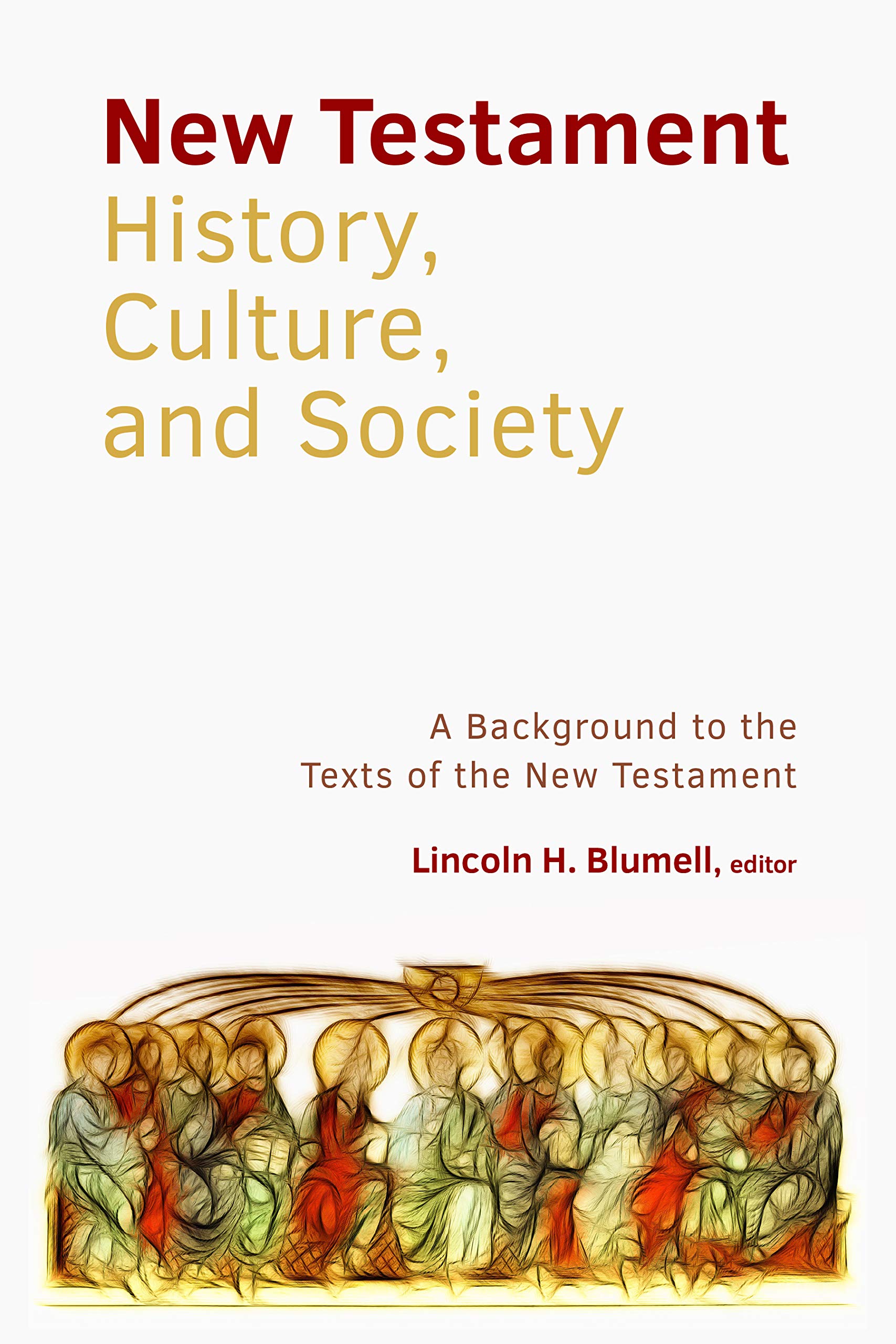
New Testament History, Culture, and Society

For those looking for background information about the New Testament, I thought I would post notice of a new book:


The book is organized thematically by topic. It is not a scriptural commentary, but rather a series of essays that might be helpful to those who wish further information about a particular topic.

There are sections on
  • the Jewish background of the New Testament, 
  • the Greco-Roman background, 
  • Jesus, 
  • Paul, 
  • New Testament issues, 
  • the text of the New Testament, 
  • and the time immediately after the New Testament. 
Within those sections, essays focus on a particular topic. An index and a citation index round off the volume.

Contributors include:
  • Grant Adamson
  • Terry B. Ball
  • Daniel Becerra
  • Daniel L. Belnap
  • Lincoln H. Blumell 
  • Matthew L. Bowen
  • David M. Calabro
  • Jason R. Combs
  • Luke Drake
  • Mark D. Ellison
  • Alan Taylor Farnes
  • Nicholas J. Frederick
  • John Gee
  • Bryce Gessell
  • Tyler J. Griffin 
  • Trevan G. Hatch
  • Eric D. Huntsman
  • Kent P. Jackson
  • Frank F. Judd Jr. 
  • Seth S. Larsen
  • Jared W. Ludlow
  • Jan J. Martin
  • Joshua M. Matson 
  • Daniel O. McClellan
  • Robert L. Millet 
  • George A. Pierce
  • Dana M. Pike 
  • Noel B. Reynolds
  • David Rolph Seely
  • Avram R. Shannon 
  • Andrew C. Skinner 
  • Andrew C. Smith
  • Julie M. Smith 
  • Kristin H. South
  • Gaye Strathearn
  • Catherine Gines Taylor
  • Michael R. Trotter
  • Thomas A. Wayment
  • John W. Welch
  • Anita Cramer Wells
  • Eric Odin Yingling

Saturday, October 20, 2018

Proto-Sinaitic Again

It has been a couple of years since this topic came up (previous posts here and here), If anyone still actually cares about Douglas Petrovich's speculations on Proto-Sinaitic, David Falk has a rather devastating review in the Review of Biblical Literature.

Thursday, July 12, 2018

The Oldest Text of the Odessey?

News reports (here, and here) report the discovery of a third century A.D. clay tablet with lines from Homer's Odessey found near the temple of Zeus at Olympia. Some of the reports claim that this is the oldest copy of the Odessey ever found. The claim, however, is missing two words: in Greece. Some of the news reports included the two words, others did not. The two words are significant. Back in 1988 (thirty years ago) Orsolina Montevecchi listed 93 copies of the Odessey that are older (some five-hundred years older). Those copies, however, were found in Egypt.

It is also worth noting that the date of the new manuscript from Greece is about a millennium after the typical date for Homer. This serves as a reminder that there is often a large gap between when a literary text is written and the date of the earliest manuscript.

So cheers to the archaeologists and the Greeks for this new discovery. And a groan for the careless editor who left out two important words. Small details can make big differences.